Sun protection works best on the outside: the fabric stops the heat before it comes through the glass. A screen with zip guides stays taut in wind too, whereas an ordinary drop-arm awning has to come in. And you keep the view: the fabric is see-through from inside out, not the other way round.

Where the screen goes depends on where the sun comes from and what you want: coolness, shade or privacy.

The usual starting point: one screen across the full width of the front. Keeps the low afternoon and evening sun out and gives privacy straight away.
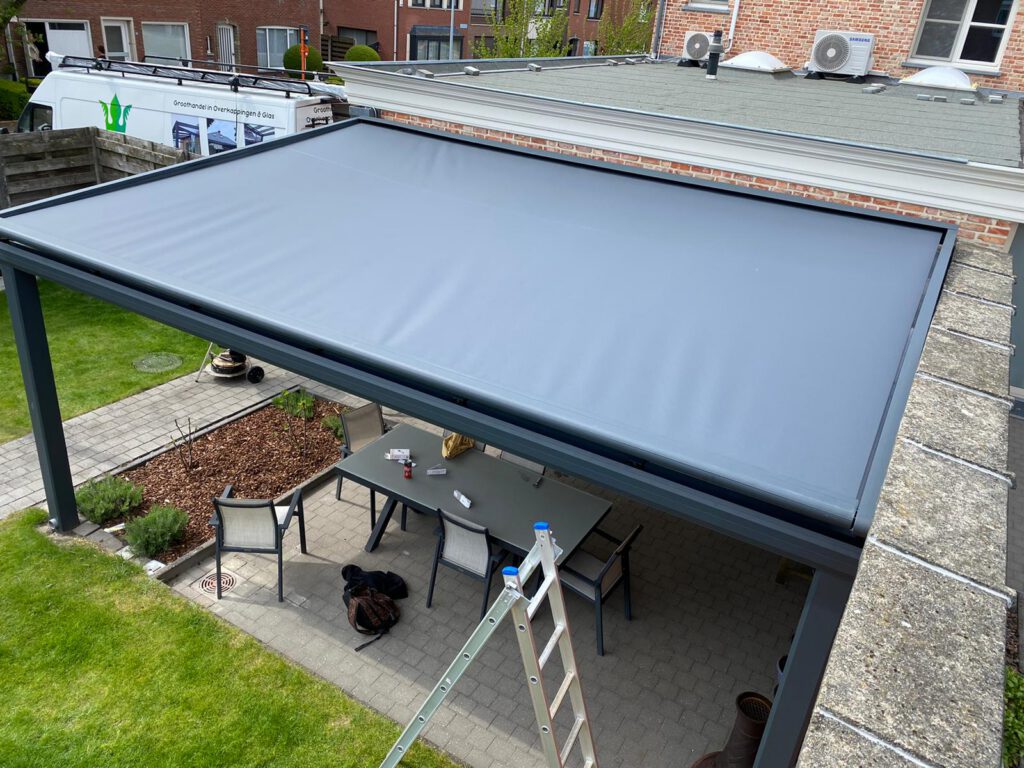
For the side where the morning or evening sun comes in, or where you want to sit out of the neighbours' view. Often a narrower screen beside a sliding wall.
Under or above the roof sheet, across the full depth. The best solution with a south-facing glass roof: the heat does not even get through.
The fabric is glass fibre with a PVC coating: strong, colourfast and it does not stretch. It runs in a zip on both sides, and that zip is what makes the difference — it holds the fabric taut instead of flapping, even in wind. The cassette it rolls into is as wide as your profile, so when the screen is up you barely see it.

Screens sit tightest when they go into the structure straight away.
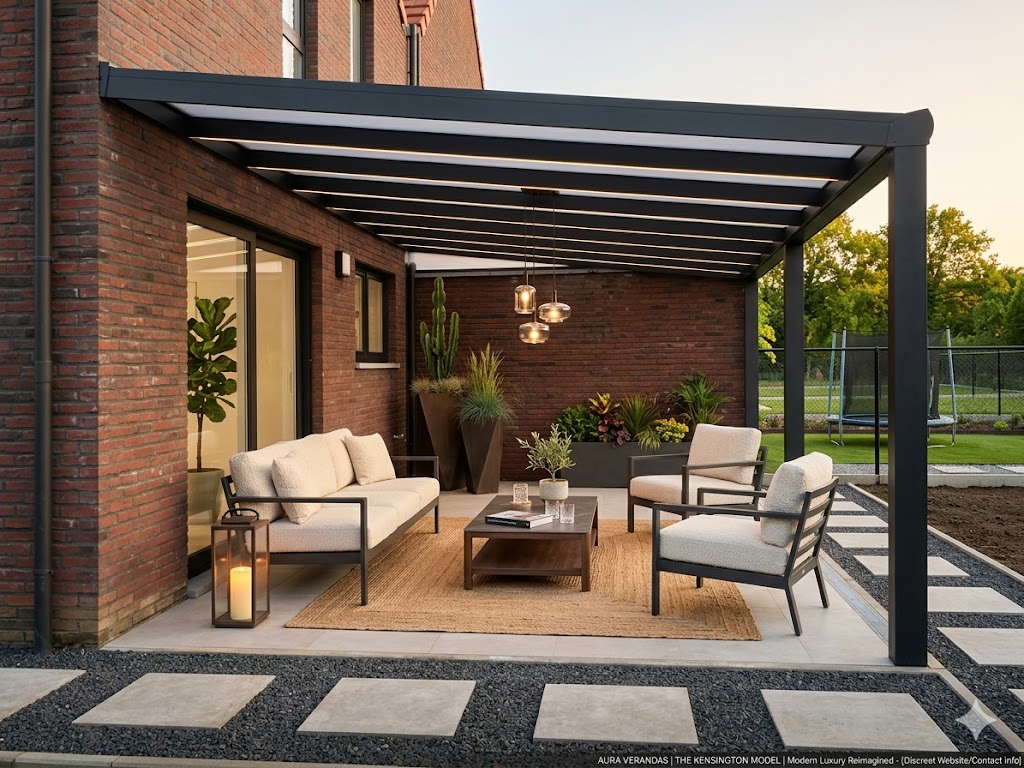
Would you rather control the sun with the roof itself? Turn the louvres closed and it is shade.
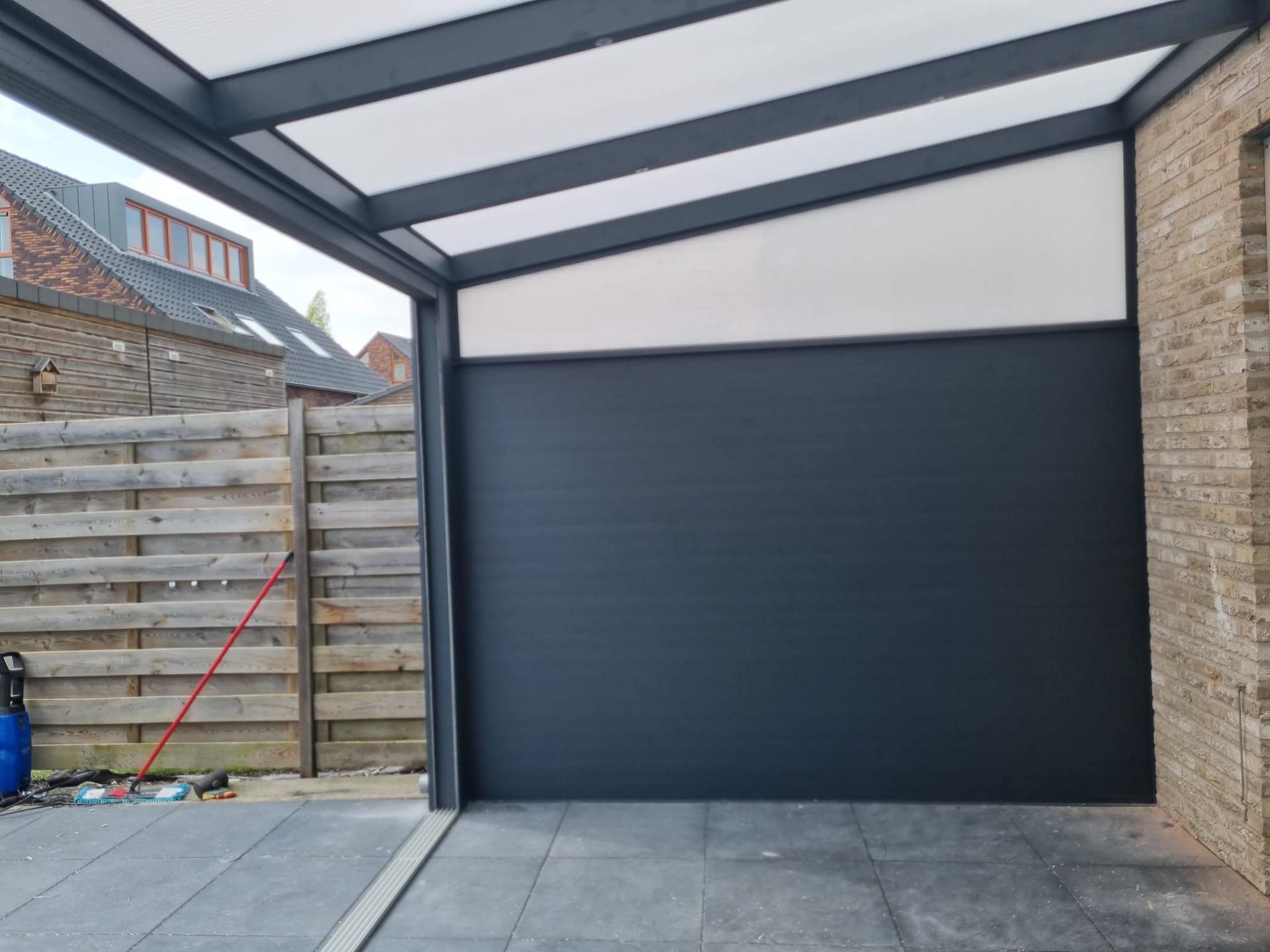
A screen against the sun, a sliding wall against the wind. Together they let you use your terrace nearly all year.
Sun protection is the part people put off longest and afterwards say they should have done straight away. Take it along with your veranda and the guides disappear into the structure and you pay no separate installation. Fitting it later is always possible — the guide then sits against the post, which looks slightly less clean but works exactly as well.

Everything arrives cut to size and pre-drilled, with a clear manual. Two people, an ordinary toolbox and a Saturday. Get stuck? Just call us from the garden.
How the installation works
Not in the mood for DIY, or is the situation awkward? Our installation partner comes to measure and fit. You know in advance where you stand, and the warranty is exactly the same as when you do it yourself.
Request installation
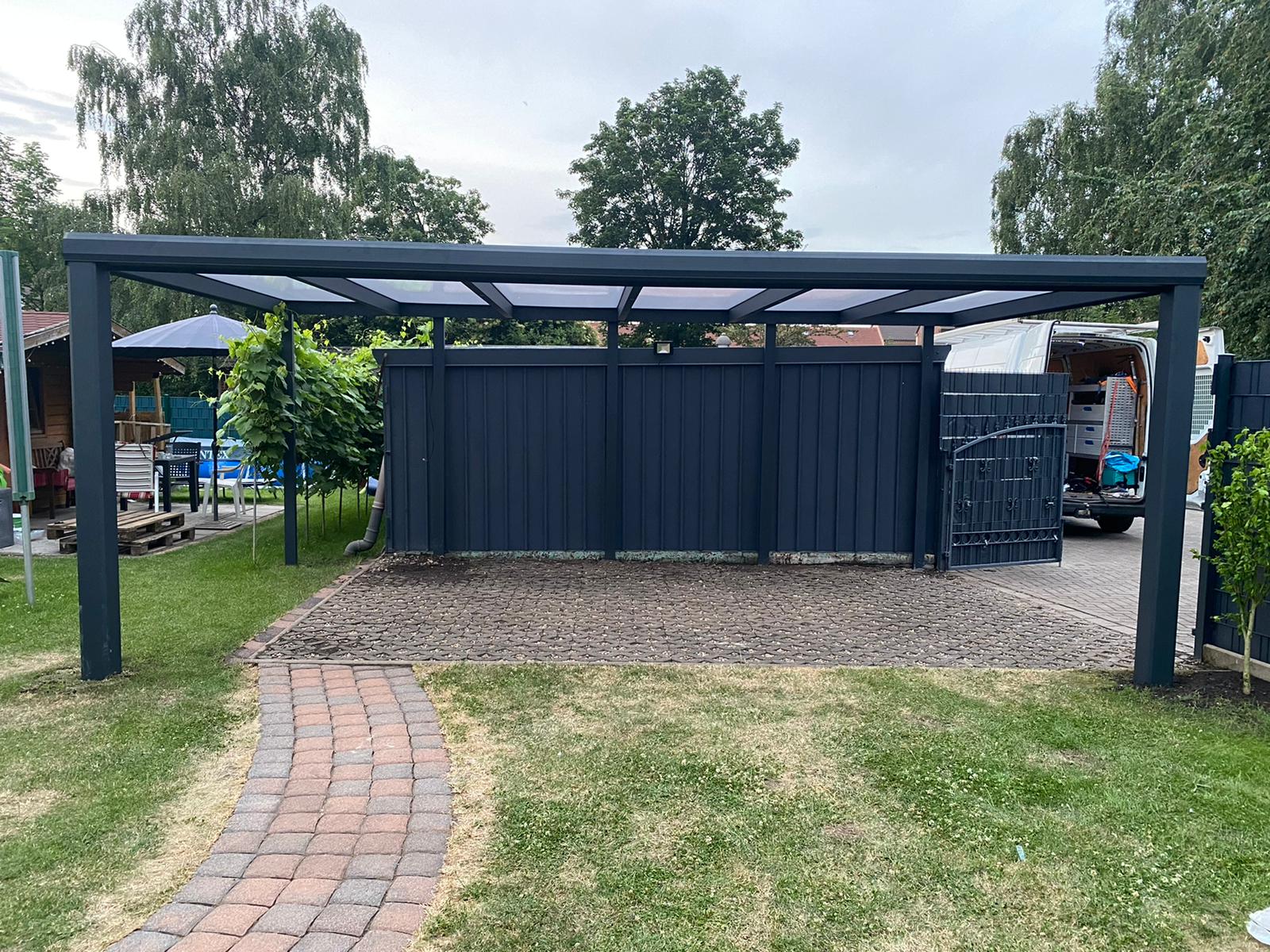
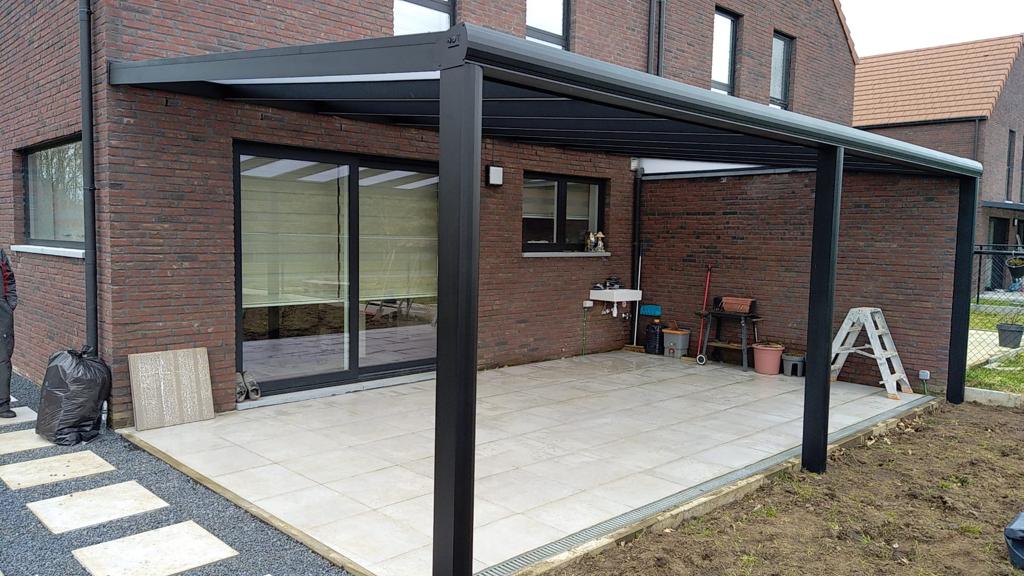
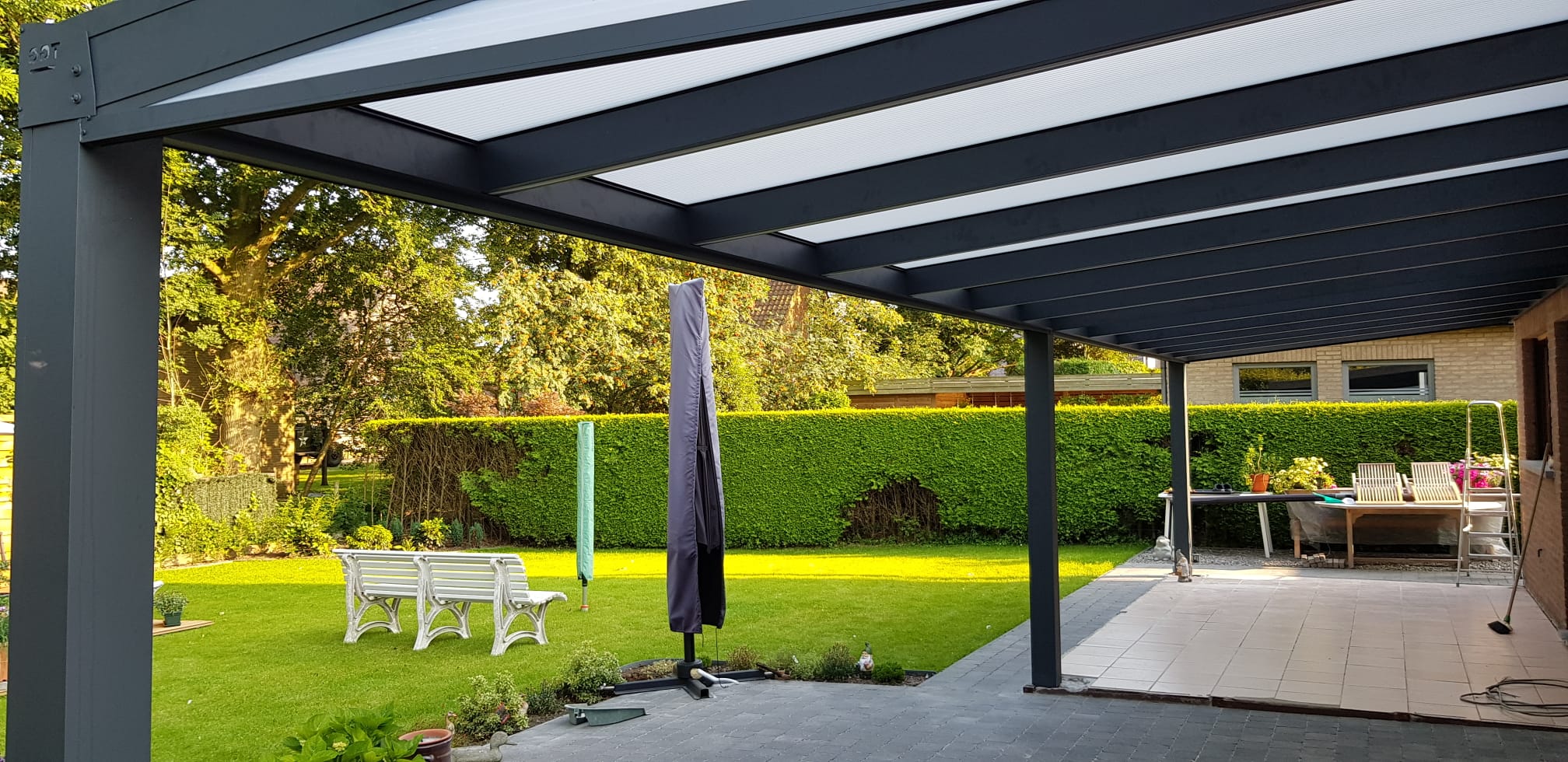
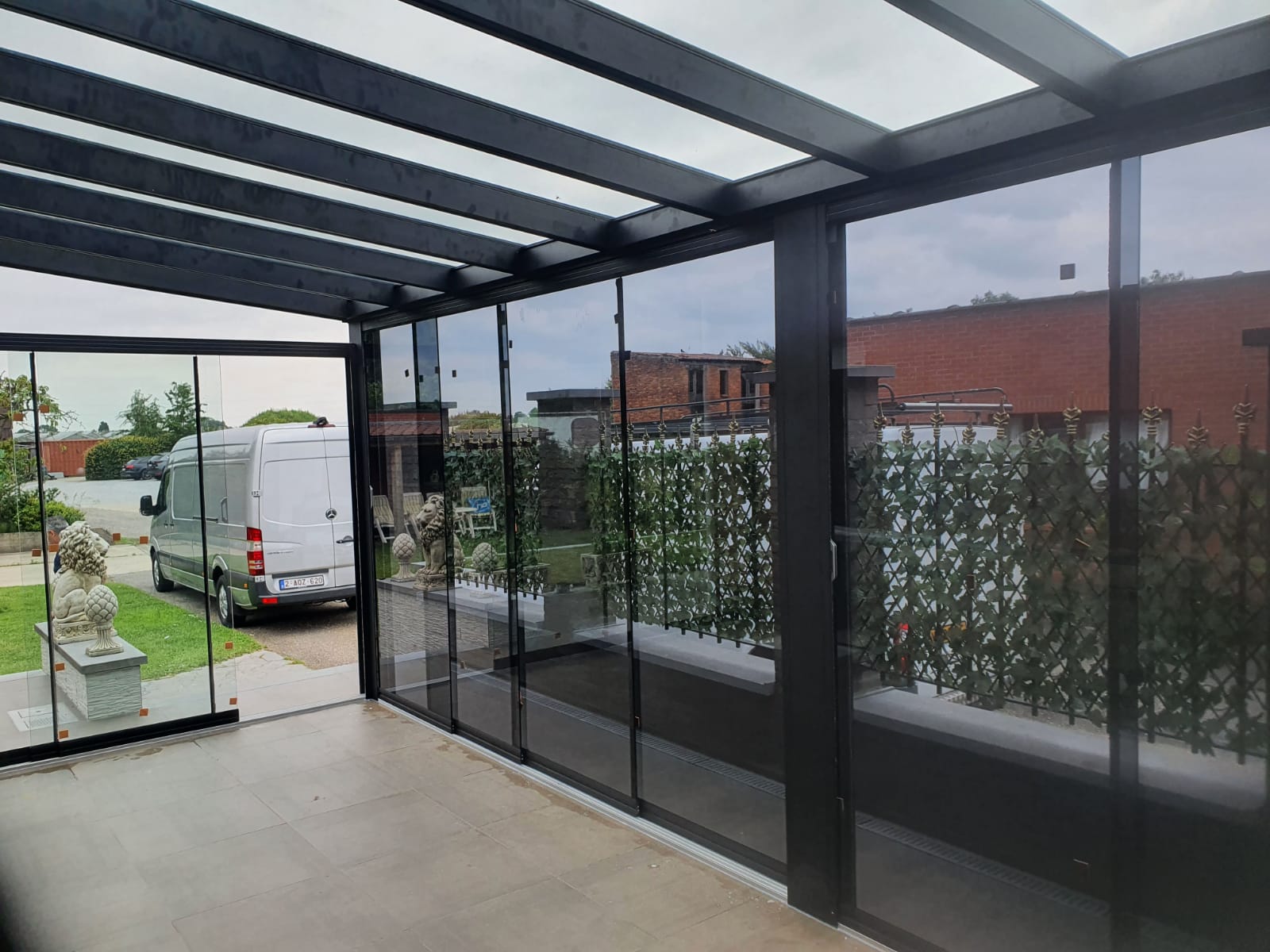

“Lang getwijfeld welk bedrijf maar blij dat we voor deze gekozen hebben. Alles goed uitgelegd, geen gedoe, en het resultaat mag gezien worden. Dikke merci aan de mannen die hem kwamen zetten 👍”

“Super vriendelijk, snel geregeld,en zeer ervaren mensen. Werken erg netjes!! Zeer goede prijs verhouding. Lastig hoekjes en project maar het het is ze zeker uitstekend gelukt!!! Ongeveer 6meter bij 4meter. Nu nog ff alles goed inrichten en dan kan de zomer beginnen!!!”

“Ik heb een veranda gekocht bij Hett Veranda en ben erg tevreden. Alles verliep soepel en er werd goed naar mijn wensen geluisterd. De afwerking is strak en je ziet echt dat er oog is voor detail. De montage ging snel en netjes. Zeker een aanrader!”

“Fijne ervaring in de showroom. Ik ben vriendelijk geholpen en kreeg goed advies. De medewerkers namen de tijd om mijn vragen te beantwoorden. Erg tevreden over de service. Zeker een aanrader!”

“Onlangs een veranda laten plaatsen en we zijn ontzettend blij met het resultaat. Vanaf het eerste gesprek hadden we een goed gevoel. Er werd goed meegedacht, afspraken werden nagekomen en de communicatie was prettig. De monteurs werkten netjes en waren vriendelijk. Alles is strak afgewerkt en de kwaliteit is top. We zitten nu veel vaker buiten en hadden dit eigenlijk veel eerder moeten doen. Zeker een aanrader als je op zoek bent naar een betrouwbaar bedrijf voor een veranda!”
